
Association Between Vitamin D Status and Renal Impairment in Type 2 Diabetic Patients Treated with Metformin in N'Djamena (Chad)
-
Clautilde Teugwa Mofor
Department of Biochemistry, Faculty of Science, University of Dschang, Dschang, Cameroon
Berambaye RenaudDepartment of Biochemistry, Faculty of Science, University of Dschang, Dschang, Cameroon
Denis ZofouFaculty of Health Sciences, University of Buea, Buea, Cameroon
Florian Amel TekouDepartment of Biochemistry, Faculty of Science, University of Dschang, Dschang, Cameroon
Jean Paul Dzoyem

Department of Biochemistry, Faculty of Science, University of Dschang, Dschang, Cameroon
| Received 11 Jul, 2026 |
Accepted 06 Sep, 2026 |
Published 20 Sep, 2026 |
Background and Objective: Vitamin D plays an important role in metabolic and renal health, and its deficiency has been linked to chronic kidney disease (CKD). This study evaluated the association between vitamin D deficiency and renal impairment among metformin-treated patients with Type 2 Diabetes Mellitus (T2DM) at the National Referral University Hospital of N'Djamena, Chad. Materials and Methods: A cross-sectional study was conducted from April to June 2025 among 88 adults with T2DM receiving metformin for at least six months. Serum 25-hydroxyvitamin D [25(OH)D], creatinine, albumin, glycated hemoglobin (HbA1c), fasting blood glucose, and estimated glomerular filtration rate (eGFR) were measured. Vitamin D deficiency was defined as 25(OH)D <20 ng/mL and renal impairment as eGFR <60 mL/min/1.73 m2. Multivariate logistic regression identified factors associated with renal impairment. Results: Vitamin D deficiency and renal impairment were present in 35.2% and 30.7% of participants, respectively. Vitamin D-deficient patients had lower eGFR (p = 0.019), higher serum creatinine (p = 0.015), and lower albumin (p = 0.025). Vitamin D deficiency independently predicted renal impairment (AOR = 3.80, 95% CI: 1.40–10.20; p = 0.008), along with elevated HbA1c, fasting blood glucose, hypoalbuminemia, and serum creatinine. Conclusion: Vitamin D deficiency is common among metformin-treated patients with T2DM in Chad and is independently associated with renal impairment. Routine vitamin D and renal function assessment may improve early identification of patients at risk of diabetic kidney disease.
| Copyright © 2026 Mofor et al. This is an open-access article distributed under the Creative Commons Attribution License, which permits unrestricted use, distribution, and reproduction in any medium, provided the original work is properly cited. |
INTRODUCTION
Type 2 Diabetes Mellitus (T2DM) is a chronic metabolic disorder characterized by persistent hyperglycemia resulting from insulin resistance and progressive pancreatic β-cell dysfunction1. It represents one of the most important public health challenges worldwide due to its increasing prevalence and its association with severe microvascular and macrovascular complications2. According to the International Diabetes Federation3, approximately 537 mL adults were living with diabetes globally in 2021, and this number is projected to rise to 783 mL by 2045. The burden of diabetes is increasing particularly rapidly in low- and middle-income countries, including those in Sub-Saharan Africa, where urbanization, population growth, physical inactivity, and changes in dietary habits are driving the epidemic4,5.
Among the chronic complications of T2DM, chronic kidney disease (CKD) is one of the most serious and costly. Diabetic kidney disease affects approximately 30-40% of individuals with diabetes and is currently the leading cause of end-stage renal disease worldwide6. The CKD substantially increases the risk of cardiovascular disease, hospitalization, reduced quality of life, and premature mortality. In many African countries, including Chad, the burden of diabetic nephropathy is compounded by limited access to early screening, nephrology services, and renal replacement therapies, leading to delayed diagnosis and poor clinical outcomes7. Consequently, the identification of modifiable risk factors associated with renal impairment remains a major priority for improving diabetes management in resource-limited settings.
Vitamin D is a secosteroid hormone traditionally recognized for its role in calcium and phosphate homeostasis and bone health. However, increasing evidence suggests that vitamin D also exerts important effects on immune regulation, inflammation, cellular proliferation, and cardiovascular function8. Vitamin D receptors are widely expressed in several tissues, including pancreatic β-cells, vascular endothelial cells, and renal tissue, indicating broader physiological functions beyond skeletal metabolism. Emerging research has demonstrated that vitamin D may influence insulin secretion, insulin sensitivity, and glucose metabolism, suggesting a potential role in the pathogenesis and progression of T2DM9.
Vitamin D deficiency is highly prevalent among individuals with T2DM and has been associated with adverse renal outcomes. Several mechanisms have been proposed to explain this relationship. Vitamin D suppresses renin gene expression and modulates the renin–angiotensin-aldosterone system, a key pathway involved in the development and progression of diabetic nephropathy10. In addition, vitamin D exhibits anti-inflammatory and antifibrotic properties that may protect renal tissue from chronic injury. Conversely, vitamin D deficiency may contribute to glomerular damage, increased albuminuria, and progressive decline in renal function11. Furthermore, impaired kidney function itself reduces the conversion of 25-hydroxyvitamin D to its biologically active form, creating a bidirectional relationship between vitamin D deficiency and CKD12.
Several studies conducted in Europe, Asia, and North America have reported significant associations between low vitamin D levels and reduced renal function in diabetic populations13. However, evidence from Sub-Saharan Africa remains limited despite the growing prevalence of diabetes and CKD in the region. Environmental, nutritional, genetic, and socioeconomic factors may influence vitamin D status differently across populations, making local data essential for informing clinical practice and public health strategies14. In Chad, information regarding vitamin D deficiency and its potential relationship with renal impairment among patients with T2DM is particularly scarce.
In addition, metformin remains the first-line pharmacological treatment for T2DM and is widely prescribed in routine clinical practice. Some studies have suggested that metformin may influence vitamin D metabolism and related biochemical pathways, although the underlying mechanisms remain incompletely understood15. Understanding the interaction between vitamin D status and renal function in patients receiving metformin may therefore provide valuable insights for optimizing diabetes management.
Given the high burden of diabetes and CKD and the limited evidence available in Central Africa, this study aimed to evaluate the association between vitamin D deficiency and renal impairment among patients with T2DM treated with metformin at the National Referral University Hospital of N'Djamena, Chad.
MATERIALS AND METHODS
Study design and setting: A cross-sectional descriptive and analytical study was conducted between April and June 2025 at the National Referral University Hospital of N’Djamena (CHURN), the main tertiary healthcare center in Chad.
Ethical considerations: The study received administrative authorization from the National Referral University Hospital of N'Djamena before data collection. The investigation was conducted in accordance with the principles of the Declaration of Helsinki. All participants provided written informed consent before inclusion in the study. Personal identifiers were removed from the dataset, and confidentiality was strictly maintained.
Study population: Included in the present study were T2DM patients receiving metformin for at least six months. Inclusion required a confirmed diagnosis and informed consent. Patients with non-diabetic kidney diseases or recent vitamin D supplementation were excluded.
Sociodemographic and clinical data collection: Data, including age, sex, Body Mass Index (BMI), duration of diabetes, hypertension status, and physical activity, were collected through structured questionnaires and medical records. Biochemical analyses included fasting blood glucose, glycated Hemoglobin (HbA1c), serum creatinine, albumin, urea, lipid profile, and hydroxy-Vitamin D (25-OH-D) levels. Blood samples were obtained after 12 hrs of fasting.
Definitions: Vitamin D deficiency: 25-OH-D <20 ng/mL16; eGFR calculated using CKD-EPI equation17; Renal impairment: eGFR <60mL/min/1.73 m2 18.
Statistical analysis: Data were analyzed using SPSS version 26. Continuous variables were expressed as Mean±Standard Deviation or median (IQR), and categorical variables as percentages. Associations were assessed using Chi-square, Student’s t-test, or Mann-Whitney test as appropriate. Multivariate logistic regression was used to identify independent predictors, adjusting for confounders. Statistical significance was set at p<0.05.
RESULTS
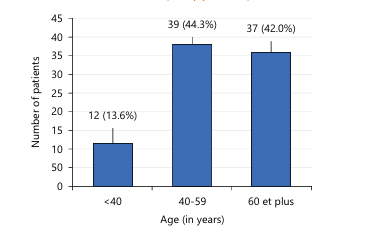
Sociodemographic characteristics of the study population: The distribution of patients according to sex and age group is presented in Fig. 1. A total of 88 patients with T2DM treated with metformin were included in the study. The mean age was 56.8±10.3 years, and males represented 60.2% of the study population.
Table 1 shows the distribution of patients according to educational level and monthly income. Vitamin D deficiency was observed in 35.2% of participants, while 31.8% presented vitamin D insufficiency and 33.0% had normal vitamin D levels. Overall, more than two-thirds (67.0%) had suboptimal vitamin D status. Most participants had attained at least primary education, with secondary education being the most frequent category (30.7%). Regarding monthly income, 60.3% reported earnings below 100,000 FCFA per month shown in Table 2.
Clinical characteristics of the study population: The clinical characteristics of the study population are depicted in Table 3. Sedentary lifestyle was reported by 28.4% of participants. More than half of the patients (58.0%) had diabetes duration of 10 years or less, while hypertension was present in 43.2% of the study population. Most patients (81.8%) received metformin in combination with other antidiabetic medications, and regular medical follow-up every 3-6 months was reported by 46.6% of participants.
|
| Table 1: | Distribution of patients according to vitamin D status | |||
| Vitamin D status | Sample size (n) | Frequency (%) |
| Deficiency | 31 | 35.2 |
| Insufficiency | 28 | 31.8 |
| Normal | 29 | 33.0 |
| Table 2: | Distribution of patients according to educational level and monthly income | |||
| Category | Number (n) | Frequency (%) |
| Educational level | ||
| No formal education | 18 | 20.5 |
| Primary | 26 | 29.5 |
| Secondary | 27 | 30.7 |
| University | 17 | 19.3 |
| Monthly income (FCFA) | ||
| <50 000 | 24 | 27.3 |
| 50 000-100 000 | 29 | 33.0 |
| 100 000-250 000 | 22 | 25.0 |
| >250 000 | 13 | 14.7 |
| Table 3: | Distribution of patients according to physical activity, duration of diabetes, hypertension, renal history, treatment, and medical follow-up | |||
| Category | Number (n) | Frequency (%) |
| Physical activity | ||
| Sedentary | 25 | 28.4 |
| Light | 23 | 26.1 |
| Moderate | 22 | 25.0 |
| Intense | 18 | 20.5 |
| Duration of diabetes (in years) | ||
| 10 | 51 | 58.0 |
| >10 | 37 | 42.0 |
| Hypertension | ||
| Yes | 38 | 43.2 |
| No | 50 | 56.8 |
| Renal history | ||
| Yes | 17 | 19.3 |
| No | 71 | 80.7 |
| Antidiabetic treatment | ||
| Metformin alone | 16 | 18.2 |
| Metformin+others | 72 | 81.8 |
| Frequency of medical follow up | ||
| Monthly | 23 | 26.1 |
| every 3-6 month | 41 | 46.6 |
| Once a year | 15 | 17.0 |
| Only if symptom occur | 9 | 10.2 |
|
| Table 4: | Distribution of patients according to biological parameters | |||
| Category | Modality | Number (n) | Frequency (%) |
| Creatinine | Normal | 41 | 46.6 |
| Elevated | 47 | 53.4 | |
| Estimated eGFR (CKD-EPI) | Normal (≥60 mL/min/1.73m²) | 61 | 69.3 |
| Reduced (<60 mL/min/1.73m²) | 27 | 30.7 | |
| Urea | Normal | 43 | 48.9 |
| Elevated | 45 | 51.1 | |
| Serum albumin | Normal (≥35 g/L) | 45 | 51.1 |
| Low (<35 g/L) | 43 | 48.9 | |
| Fasting blood glucose | Normal (<1.26 g/L) | 43 | 48.9 |
| Elevated (≥1.26 g/L) | 45 | 51.1 | |
| HbA1c | <6.5 % | 32 | 36.4 |
| ≥6.5 % | 56 | 63.6 | |
| Total Cholesterol | Normal | 66 | 75.0 |
| Elevated | 22 | 25.0 | |
| LDL-cholesterol | Normal | 59 | 67.0 |
| Elevated | 29 | 33.0 | |
| HDL-cholesterol | Normal | 57 | 64.8 |
| Low | 31 | 35.2 | |
| Triglycerides | Normal | 65 | 73.9 |
| Elevated | 23 | 26.1 | |
| Vitamin D (25(OH)D) | Deficiency(<20 ng/mL) | 31 | 35.2 |
| Insufficient and normal (≥20 ng/mL) | 57 | 64.8 |
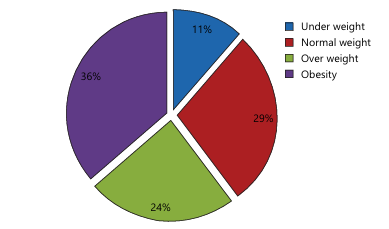
The distribution of patients according to Body Mass Index (BMI) is shown in Fig. 2. Obesity was the most common BMI category, affecting 36.4% of participants, followed by normal weight (28.4%), overweight (23.9%), and underweight (11.4%).
Biological characteristics of the study population: The biological and metabolic characteristics of the participants are summarized in Table 4. Abnormal renal biomarkers were common among participants. Elevated serum creatinine and urea levels were observed in 53.4 and 51.1% of patients, respectively. Renal impairment (eGFR <60 mL/min/1.73 m2) affected 30.7% of participants. Nearly half of the patients had low serum albumin levels (48.9%). Poor glycemic control was also frequent, with 63.6% presenting HbA1c values ≥6.5%. Vitamin D deficiency was identified in 35.2% of the study population.
Renal function profile of participants: The distribution of participants according to renal function and KDIGO classification is reported in Table 5. Among the 88 participants, 27 (30.7%) presented renal impairment, whereas 61 (69.3%) had normal renal function. Among patients with renal impairment, KDIGO stage 3a was the most frequent category (59.3%), followed by stage 3b (25.9%) and stage 4 (14.8%). No participant was classified as stage 5.
| Table 5: | Renal status and KDIGO classification of participants | |||
| Variable | Category | Number (n) | Frequency (%) |
| Renal status (n = 88) | Normal renal function | 61 | 69.3 |
| Renal impairment | 27 | 30.7 | |
| KDIGO stage (n = 27) | Stage 3a (45-59 mL/min/1.73 m²) | 16 | 59.3 |
| Stage 3b (30-44 mL/min/1.73 m²) | 7 | 25.9 | |
| Stage 4 (15-29 mL/min/1.73 m²) | 4 | 14.8 | |
| Stage 5 (<15 mL/min/1.73 m²) | 0 | 0.0 |
| Table 6: | Comparison of renal parameters according to vitamin D status | |||
| Parameter | Vitamin D deficiency (n = 31) |
Vitamin D insufficiency (n = 28) |
Normal vitamin D (n = 29) |
Statistical test | p-value |
| eGFR (mL/min/1.73 m2) | 52.8±13.7 | 63.1±13.7 | 70.3±12.6 | F = 4.12 | 0.019 |
| Creatinine (mg/L) | 12.6±2.5 | 11.9±2.2 | 10.7±1.9 | H = 8.44 | 0.015 |
| Urea (g/L) | 0.44±0.09 | 0.43±0.10 | 0.42±0.08 | F = 0.88 | 0.419 |
| Albumin (g/L) | 33.8±3.5 | 35.1±3.2 | 36.4±2.9 | F = 3.87 | 0.025 |
| Table 7: | Association between vitamin D deficiency and renal markers | |||
| Renal Biomarker | Deficiency (n = 31) | Insufficiency (n = 57) | Total (n = 88) | χ² | p-value |
| eGFR | |||||
| Abnormal (<60 mL/min/1.73 m2) | 24 (77.4) | 3 (5.3) | 27 (30.7) | 28.9 | <0.001 |
| Normal (≥60 mL/min/1.73 m2) | 7 (22.6) | 54 (94.7) | 61 (69.3) | ||
| Creatinine | |||||
| Elevated | 25 (80.6) | 22 (38.6) | 47 (53.4) | 7.64 | 0.006 |
| Normal | 6 (19.4) | 35 (61.4) | 41 (46.6) | ||
| Urea | |||||
| Elevated | 16 (51.6) | 29 (50.9) | 45 (51.1) | 0.38 | 0.537 |
| Normal | 15 (48.4) | 28 (49.1) | 43 (48.9) | ||
| Albumin | |||||
| Low (<35 g/L) | 22 (71.0) | 21 (36.8) | 43 (48.9) | 6.78 | 0.009 |
| Normal (≥35 g/L) | 9 (29.0) | 36 (63.2) | 45 (51.1) | ||
Association between vitamin D status and renal parameters: Table 6 compares renal function parameters across different vitamin D status categories. Patients with vitamin D deficiency had significantly lower eGFR values compared with patients with insufficient or normal vitamin D levels (p = 0.019). Serum creatinine concentrations were significantly higher among vitamin D-deficient participants (p = 0.015), whereas serum albumin concentrations were significantly lower (p = 0.025). No significant difference was observed for serum urea levels (p = 0.419).
The associations between vitamin D deficiency and renal biomarkers are detailed in Table 7. Vitamin D deficiency was significantly associated with abnormal eGFR (p<0.001), elevated serum creatinine (p = 0.006), and low serum albumin levels (p = 0.009). No significant association was observed between vitamin D deficiency and serum urea levels (p = 0.537).
Factors associated with vitamin D deficiency: Independent predictors of vitamin D deficiency identified through multivariable analysis are presented in Table 8. Female sex, obesity, and sedentary lifestyle were independently associated with vitamin D deficiency. Women were nearly three times more likely to present vitamin D deficiency than men (OR = 2.78; p = 0.031). Obesity (OR = 3.80; p = 0.019) and sedentary lifestyle (OR = 5.20; p = 0.018) were also significantly associated with vitamin D deficiency.
Factors associated with renal impairment: Table 9 presents the independent factors associated with renal impairment in the study population. Multivariate logistic regression analysis identified vitamin D deficiency as an independent factor associated with renal impairment (AOR = 3.80; 95% CI: 1.40-10.20; p = 0.008). Other factors independently associated with renal impairment included elevated HbA1c (AOR = 2.75; p = 0.025), elevated fasting blood glucose (AOR = 2.90; p = 0.031), hypoalbuminemia (AOR = 2.65; p = 0.038), and elevated serum creatinine (AOR = 5.50; p<0.001).
| Table 8: | Multivariate analysis of sociodemographic and clinical factors associated with vitamin D deficiency | |||
| Factors | OR | CI 95 % | p-value |
| Female | 2.78 | 1.10-7.00 | 0.031 |
| age≥60 years | 1.45 | 0.45-4.60 | 0.529 |
| Level of education | 2.4 | 0.85-6.78 | 0.094 |
| Income<100 000 FCFA | 1.15 | 0.45-2.89 | 0.78 |
| Duration of diabetes >10 years | 1.4 | 0.59-3.30 | 0.45 |
| BMI (obesity) | 3.8 | 1.25-11.60 | 0.019 |
| Sedentary activity | 5.2 | 1.30-20.80 | 0.018 |
| CI: Confidence interval OR: Odds Ratio | |||
| Table 9: | Multivariate analysis of factors associated with renal impairment | |||
| Variable | Modality (vs Ref) | Adjusted OR (IC 95 %) | p-value |
| Vitamin D deficiency | Yes vs No | 3.80 (1.40-10.20) | 0.008 |
| Glycated hemoglobin | ≥6.5% vs <6.5% | 2.75 (1.10-6.90) | 0.025 |
| Glycemia | High vs Normal | 2.90 (1.10-7.60) | 0.031 |
| Albumin | Low vs Normal | 2.65 (1.05-6.80) | 0.038 |
| Creatinine | Abnormal vs Normal | 5.50 (2.00-15.20) | <0.001 |
| CI: Confidence interval | |||
DISCUSSION
This study investigated the association between vitamin D status and renal function among patients with Type 2 Diabetes Mellitus (T2DM) receiving metformin therapy at the National Referral University Hospital of N'Djamena, Chad. The findings revealed a high prevalence of vitamin D deficiency (35.2%) and renal impairment (30.7%), emphasizing the substantial burden of metabolic and renal complications in this population. Furthermore, vitamin D deficiency was independently associated with renal impairment after adjustment for potential confounding factors, suggesting that low vitamin D status may represent an important marker of kidney dysfunction among patients with T2DM.
The prevalence of vitamin D deficiency observed in this study is consistent with previous reports indicating that vitamin D insufficiency is highly prevalent among individuals with diabetes19. Vitamin D deficiency has been reported in 30-80% of patients with T2DM worldwide, depending on the population studied and the diagnostic thresholds used20,21. Several factors may explain this high prevalence, including obesity, sedentary lifestyle, reduced sun exposure, chronic inflammation, aging, and altered vitamin D metabolism22. In the present study, obesity and sedentary lifestyle were independently associated with vitamin D deficiency, supporting previous observations that excess adiposity may reduce the bioavailability of vitamin D through sequestration in adipose tissue23. Similarly, reduced outdoor physical activity may decrease cutaneous vitamin D synthesis, particularly among urban populations.
One of the most important findings of this study was the strong association between vitamin D deficiency and impaired renal function. Patients with vitamin D deficiency exhibited significantly lower estimated glomerular filtration rate (eGFR) values and higher serum creatinine concentrations compared with those with sufficient vitamin D levels. Moreover, multivariable logistic regression analysis demonstrated that vitamin D deficiency increased the odds of renal impairment by nearly fourfold. These findings are consistent with previous studies showing that reduced serum 25-hydroxyvitamin D concentrations are associated with declining kidney function and increased risk of diabetic kidney disease24,25.
Several biological mechanisms may explain this relationship. Vitamin D suppresses renin gene expression and modulates the renin-angiotensin-aldosterone system, which plays a central role in the development and progression of diabetic nephropathy26. Vitamin D also possesses anti-inflammatory and antifibrotic properties that may help limit glomerular injury and tubulointerstitial fibrosis. Experimental studies have demonstrated that vitamin D receptor activation can reduce oxidative stress, inhibit inflammatory cytokine production, and attenuate renal fibrosis, thereby preserving kidney function27. Conversely, vitamin D deficiency may promote chronic inflammation, endothelial dysfunction, and activation of profibrotic pathways, accelerating renal damage28.
Another important finding was the significant association between poor glycemic control and renal impairment. Elevated HbA1c and fasting blood glucose levels were independently associated with reduced renal function. Chronic hyperglycemia contributes to diabetic kidney disease through several mechanisms, including advanced glycation end-product formation, oxidative stress, endothelial dysfunction, and activation of inflammatory pathways29. The association observed in the present study is consistent with findings from large prospective studies demonstrating that inadequate glycemic control is a major determinant of CKD progression among patients with diabetes30. These results highlight the importance of maintaining optimal glycemic control to reduce the risk of renal complications.
Hypoalbuminemia was also independently associated with renal impairment. Reduced serum albumin levels may reflect chronic inflammation, malnutrition, or urinary protein losses resulting from glomerular damage. Previous studies have shown that hypoalbuminemia is associated with adverse renal outcomes and increased mortality among patients with CKD31. Likewise, elevated serum creatinine was the strongest predictor of renal impairment identified in the present study. This finding was expected, given that serum creatinine remains one of the most widely used biomarkers of kidney function and forms the basis for eGFR estimation32.
The present findings have important clinical implications. In resource-limited settings such as Chad, routine assessment of vitamin D status is not commonly integrated into diabetes care. However, the observed association between vitamin D deficiency and renal impairment suggests that vitamin D screening may help identify patients at increased risk of diabetic kidney disease. Although current evidence does not support universal vitamin D supplementation solely for CKD prevention, correction of vitamin D deficiency may contribute to improved metabolic and renal health in selected patients31. Further randomized controlled trials are required to determine whether vitamin D supplementation can slow renal function decline among African patients with T2DM.
This study has some limitations. First, its cross-sectional design precludes conclusions regarding causality. Second, the relatively small sample size may limit the generalizability of the findings. Third, albuminuria, an important marker of diabetic kidney disease, was not assessed. Information regarding dietary vitamin D intake, sunlight exposure, seasonal variation, and inflammatory biomarkers was also unavailable. Nevertheless, the study provides valuable data from a region where information on vitamin D status and diabetic kidney disease remains scarce. Despite these limitations, the present study contributes to the growing body of evidence linking vitamin D deficiency to renal impairment in patients with T2DM. The findings underscore the need for early detection of vitamin D deficiency and comprehensive monitoring of renal function among diabetic patients in Sub-Saharan Africa. Future longitudinal studies involving larger populations are needed to clarify the causal pathways linking vitamin D status and kidney function and to evaluate the potential benefits of vitamin D-based interventions in preventing diabetic kidney disease.
CONCLUSION
Vitamin D deficiency and renal impairment were highly prevalent among patients with Type 2 Diabetes Mellitus in N'Djamena, Chad. Vitamin D deficiency was independently associated with renal impairment, together with poor glycemic control, hypoalbuminemia, and elevated serum creatinine. These findings highlight the importance of monitoring vitamin D status and renal function in diabetic patients. Further prospective studies are needed to clarify causal relationships and evaluate potential benefits of vitamin D supplementation.
SIGNIFICANCE STATEMENT
Vitamin D deficiency is common among metformin-treated patients with Type 2 Diabetes Mellitus (T2DM) in Chad and is independently associated with renal impairment. Patients with vitamin D deficiency had lower estimated glomerular filtration rate, higher serum creatinine, and lower serum albumin levels. These findings suggest that vitamin D deficiency may serve as a useful marker of diabetic kidney disease in resource-limited settings. Routine assessment of vitamin D status alongside renal function may facilitate earlier identification of patients at increased risk of chronic kidney disease.
REFERENCES
- Galicia-Garcia, U., A. Benito-Vicente, S. Jebari, A. Larrea-Sebal and H. Siddiqi et al., 2020. Pathophysiology of type 2 diabetes mellitus. Int. J. Mol. Sci., 21.
- American Diabetes Association, 2014. Diagnosis and classification of diabetes mellitus. Diabetes care, 37: S81-S90.
- Magliano, D. and E.J. Boyko, 2021. IDF Diabetes Atlas. International Diabetes Federation, Amsterdam, Netherlands, ISBN: 9782930229980.
- Atun, R., J.I. Davies, E.A.M. Gale, T. Bärnighausen and D. Beran et al., 2017. Diabetes in Sub-Saharan Africa: From clinical care to health policy. Lancet Diabetes Endocrinol., 5: 622-667.
- Mbanya, J.C.N., A.A. Motala, E. Sobngwi, F.K. Assah and S.T. Enoru, 2010. Diabetes in Sub-Saharan Africa. Lancet, 375: 2254-2266.
- Rossing, P. and A. Flyvbjerg, 2024. Diabetic Nephropathy. In: Textbook of Diabetes, Holt, R.I.G. and A. Flyvbjerg (Eds.), Wiley, New Jersey, ISBN: 9781119697473, pp: 640-654.
- Luyckx, V.A., M. Tonelli and J.W. Stanifer, 2018. The global burden of kidney disease and the sustainable development goals. Bull. World Health Organ., 96: 414-422C.
- Christakos, S., M. Hewison, D.G. Gardner, C.L. Wagner and I.N. Sergeev et al., 2013. Vitamin D: Beyond bone. Ann. N. Y. Acad. Sci., 1287: 45-58.
- Mitri, J., M.D. Muraru and A.G. Pittas, 2011. Vitamin D and type 2 diabetes: A systematic review. Eur. J. Clin. Nutr., 65: 1005-1015.
- Li, Y.C., 2003. Vitamin D regulation of the renin-angiotensin system. J. Cell. Biochem., 88: 327-331.
- Bashir, S., G.M. Ishaq, I. Mushtaq, M.A. Ganie and I. Wani et al., 2025. Association of vitamin D deficiency with diabetic nephropathy in type 2 diabetes: A hospital-based cross-sectional study. Diseases, 13.
- Wang, H., T. Yuan, W. Wu and S. Ou, 2025. Vitamin D and chronic kidney disease: Mechanisms, clinical implications, and future perspectives. Front. Med., 12.
- Huang, H.Y., T.W. Lin, Z.X. Hong and L.M. Lim, 2023. Vitamin D and diabetic kidney disease. Int. J. Mol. Sci., 24.
- Dalamaga, M., R. Emfietzoglou, D. Petropoulou, M. Kypraiou and D.C. Kounatidis et al., 2026. Vitamin D and health outcomes: State-of-the-art review of triangulated evidence and ongoing controversies. Curr. Nutr. Rep., 15.
- Kos, E., M. Liszek, M. Emanuele, R. Durazo-Arvizu and P. Camacho, 2012. Effect of metformin therapy on vitamin D and vitamin B12 levels in patients with type 2 diabetes mellitus. Endocr. Pract., 18: 179-184.
- Holick, M.F., N.C. Binkley, H.A. Bischoff-Ferrari, C.M. Gordon and D.A. Hanley et al., 2011. Evaluation, treatment and prevention of vitamin D deficiency: An endocrine society clinical practice guideline. J. Clin. Endocrinol. Metab., 96: 1911-1930.
- Levey, A.S., L.A. Stevens, C.H. Schmid, Y.L. Zhang and A.F. Castro et al., 2009. A new equation to estimate glomerular filtration rate. Ann. Intern. Med., 150: 604-612.
- Babitt, J.L., J.S. Berns, B. Bozkurt, R.S.C. Khedairy and Y. Cuevas et al., 2026. Executive summary of the KDIGO 2026 clinical practice guideline for the management of anemia in chronic kidney disease (CKD). Kidney Int., 109: 44-56.
- Vijay, G.S., S. Ghonge, S.M. Vajjala and D. Palal, 2023. Prevalence of vitamin D deficiency in type 2 diabetes mellitus patients: A cross-sectional study. Cureus, 15.
- Sung, C.C., M.T. Liao, K.C. Lu and C.C. Wu, 2012. Role of vitamin D in insulin resistance. J. Biomed. Biotechnol., 2012.
- Pittas, A.G., B. Dawson-Hughes, P. Sheehan, J.H. Ware and W.C. Knowler et al., 2019. Vitamin D supplementation and prevention of type 2 diabetes. N. Engl. J. Med., 381: 520-530.
- Fleury, N., S. Geldenhuys and S. Gorman, 2016. Sun exposure and its effects on human health: Mechanisms through which sun exposure could reduce the risk of developing obesity and cardiometabolic dysfunction. Int. J. Environ. Res. Public Health, 13.
- Wortsman, J., L.Y. Matsuoka, T.C. Chen, Z. Lu and M.F. Holick, 2000. Decreased bioavailability of vitamin D in obesity. Am. J. Clin. Nutr., 72: 690-693.
- Thomas, M.C., M. Brownlee, K. Susztak, K. Sharma and K.A.M. Jandeleit-Dahm et al., 2015. Diabetic kidney disease. Nat. Rev. Dis. Primers, 1.
- de Boer, I.H., G.N. Ioannou, B. Kestenbaum, J.D. Brunzell and N.S. Weiss, 2007. 25-hydroxyvitamin D levels and albuminuria in the Third National Health and Nutrition Examination Survey (NHANES III). Am. J. Kidney Dis., 50: 69-77.
- Tomaschitz, A., S. Pilz, E. Ritz, T. Grammer, C. Drechsler, B.O. Boehm and W. März, 2010. Independent association between 1,25-dihydroxyvitamin D, 25-hydroxyvitamin D and the renin-angiotensin system: The Ludwigshafen Risk and Cardiovascular Health (LURIC) study. Clin. Chim. Acta, 411: 1354-1360.
- Pilz, S., C. Trummer, M. Pandis, V. Schwetz and F. Aberer et al., 2018. Vitamin D: Current guidelines and future outlook. Anticancer Res., 38: 1145-1151.
- Kim, C.S. and S.W. Kim, 2014. Vitamin D and chronic kidney disease. Korean J. Intern. Med., 29: 416-427.
- Thomas, M.C., M.E. Cooper and P. Zimmet, 2016. Changing epidemiology of type 2 diabetes mellitus and associated chronic kidney disease. Nat. Rev. Nephrol., 12: 73-81.
- Sattar, N., C. Presslie, M.K. Rutter and D.K. McGuire, 2024. Cardiovascular and kidney risks in individuals with type 2 diabetes: Contemporary understanding with greater emphasis on excess adiposity. Diabetes Care, 47: 531-543.
- Rossing, P., M.L. Caramori, J.C.N. Chan, H.J.L. Heerspink and C. Hurst et al., 2022. KDIGO 2022 clinical practice guideline for diabetes management in chronic kidney disease. Kidney Int., 102: S1-S127.
- Pottel, H., P. Delanaye and E. Cavalier, 2024. Exploring renal function assessment: Creatinine, cystatin C, and estimated glomerular filtration rate focused on the European kidney function consortium equation. Ann. Lab. Med. 44: 135-143.
How to Cite this paper?
APA-7 Style
Mofor,
C.T., Renaud,
B., Zofou,
D., Tekou,
F.A., Dzoyem,
J.P. (2026). Association Between Vitamin D Status and Renal Impairment in Type 2 Diabetic Patients Treated with Metformin in N'Djamena (Chad). Trends in Medical Research, 21(1), 77-86. https://doi.org/10.3923/tmr.2026.77.86
ACS Style
Mofor,
C.T.; Renaud,
B.; Zofou,
D.; Tekou,
F.A.; Dzoyem,
J.P. Association Between Vitamin D Status and Renal Impairment in Type 2 Diabetic Patients Treated with Metformin in N'Djamena (Chad). Trends Med. Res 2026, 21, 77-86. https://doi.org/10.3923/tmr.2026.77.86
AMA Style
Mofor
CT, Renaud
B, Zofou
D, Tekou
FA, Dzoyem
JP. Association Between Vitamin D Status and Renal Impairment in Type 2 Diabetic Patients Treated with Metformin in N'Djamena (Chad). Trends in Medical Research. 2026; 21(1): 77-86. https://doi.org/10.3923/tmr.2026.77.86
Chicago/Turabian Style
Mofor, Clautilde, Teugwa, Berambaye Renaud, Denis Zofou, Florian Amel Tekou, and Jean Paul Dzoyem.
2026. "Association Between Vitamin D Status and Renal Impairment in Type 2 Diabetic Patients Treated with Metformin in N'Djamena (Chad)" Trends in Medical Research 21, no. 1: 77-86. https://doi.org/10.3923/tmr.2026.77.86

This work is licensed under a Creative Commons Attribution 4.0 International License.
